
CBG : The Mother Cannabinoid I Starbird Salem
If you regularly smoke pot, you’d know that the big player in cannabis is THC, the psychoactive cannabinoid. You might also know about CBD and some of its qualities. But did you know that there are over a hundred cannabinoids, all with their own special properties?
At Starbird, we value every single cannabinoid. Today, we are going to get you more familiar with CBG. It has been rising in popularity, and can easily be found in flower, concentrates and edibles. Read on to know all about its effects and composition, and why they refer to it as ‘the mother cannabinoid.’
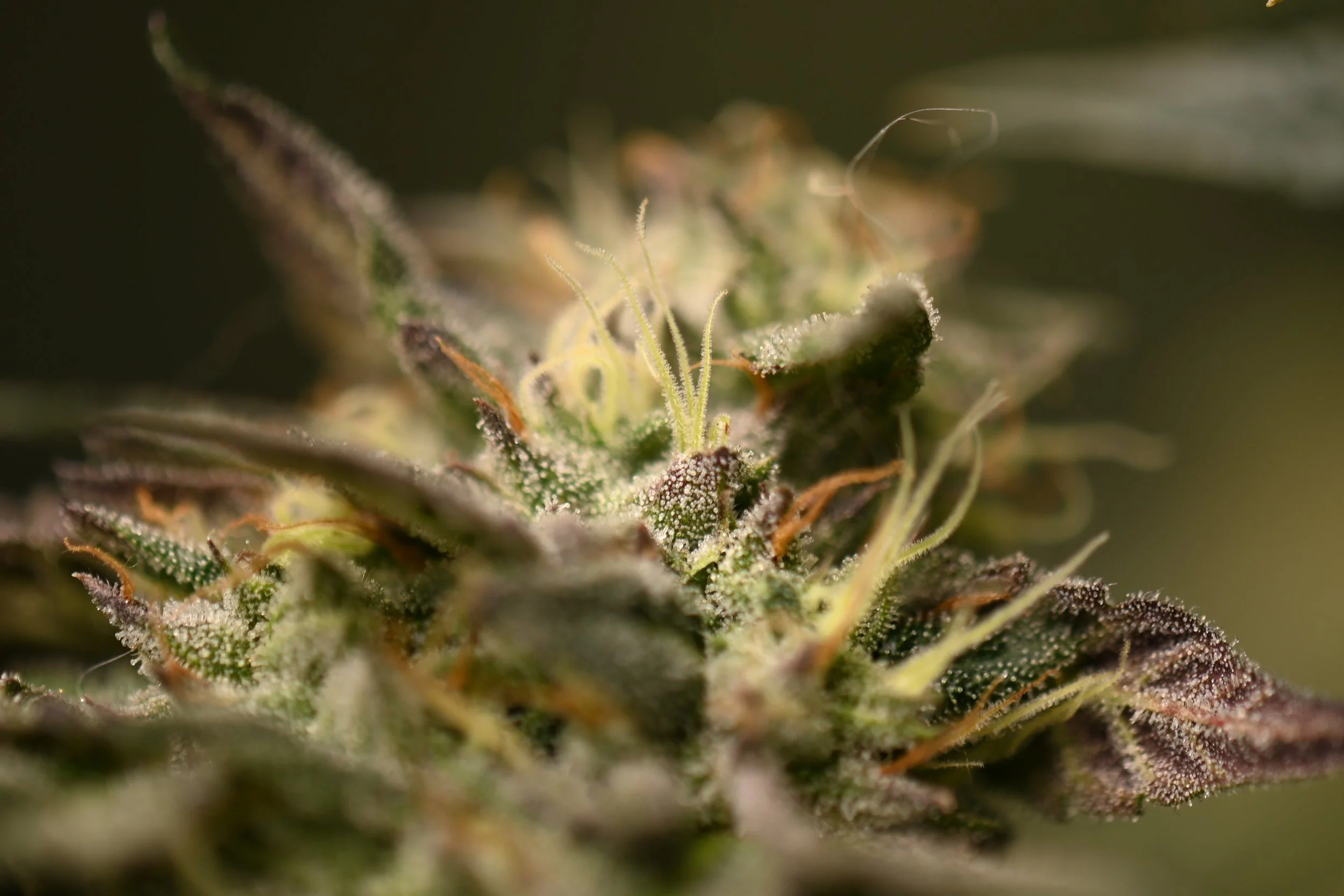
Cola of a cannabis plant
What Is CBG?
CBG (cannabigerol) is a non-psychoactive cannabinoid that is present in hemp and cannabis that interacts with these same receptors. “So if it doesn’t get you high, what does it do?”
Cannabigerol interacts with the brain and body via the endocannabinoid system (ECS).The ECS is basically your body’s internal balance regulator, helping control mood and stress.
THC produces its high primarily by strongly binding to CB1 receptors in the brain, especially in areas that control mood, perception, and fear processing like the amygdala and prefrontal cortex. This strong activation increases dopamine release, which contributes to euphoria, but overstimulation of CB1 receptors can also heighten anxiety in some people.
CBG acts differently. Studies show this cannabinoid binds subtly to both CB1 and CB2 receptors, serotonin receptors, and alpha-2 adrenergic receptors. Although momentum is still growing, these are the suggested theories from trials with CBG.
CB1 receptors are responsible for regulating things like mood, appetite, memory, and pain, all of which are noticeably different with most individuals when THC is involved.
CB2 receptors are present in brain cells, the immune system and peripheral nerve tissue. These are responsible for signalling immune responses and inflammation.
Serotonin receptors (especially 5-HT1A) are part of the system that regulates mood, emotional stability, and anxiety levels. When serotonin signaling is balanced, it supports feelings of calm and well-being.
Alpha-2 adrenergic receptors help regulate the release of norepinephrine, a neurotransmitter tied to alertness and the fight-or-flight response. When these receptors are activated, they reduce excessive norepinephrine release, helping calm the stress response.
CBG is often referred to as a low-affinity weak partial agonist, meaning it binds to the CB1 receptor weakly compared to compounds like THC, which has a much tighter bond. If you were comparing it to a light switch, THC would turn the lights fully on, shining brightly. But CBG would barely raise the dimmer, just adding a bit of light to the room. Minor cannabinoids can greatly influence how THC behaves in our bodies. If CBG is already bound to CB1 receptors, sometimes it can reduce the effect of stronger compounds like THC. This is because both the compounds are competing for the same spot, so CBG can make a strong psychoactive effect more tempered.
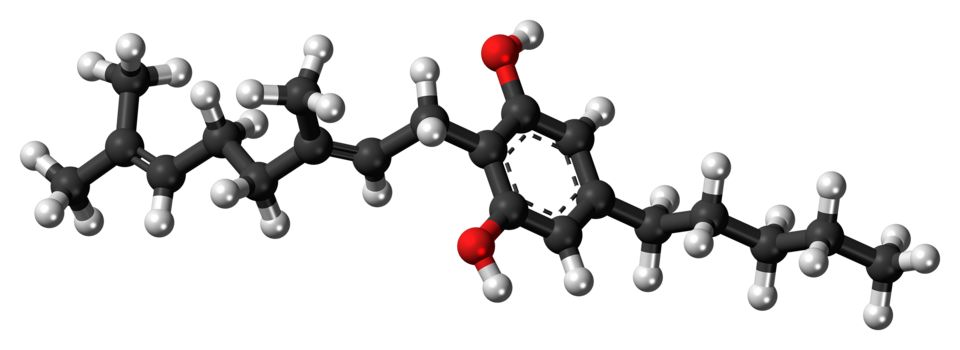
Ball-and-stick model of the CBG (cannabigerol) molecule
What Are the Potential Benefits of CBG?
“When I smoke weed with a lot of CBG, I always feel happy, floaty and peaceful” one of our budtenders reports. Over the years of trying new products, our staff often gravitates towards products rich in CBG. They find it provides fun, cheerful and tempered highs. But here’s some leading science to back why it makes us feel this way, and its other capabilities.
Anti-inflammatory Properties
Many cannabinoids have been studied for their potential anti-inflammatory properties, largely due to how they interact with CB1 and CB2 receptors in the endocannabinoid system. CBG is no exception, as some of its pharmacological activity is linked to these receptors. However, research also suggests that CBG’s anti-inflammatory potential may extend beyond the ECS. Studies indicate it may influence pathways involving peroxisome proliferator-activated receptor gamma (PPAR-γ), a receptor that plays a role in regulating inflammation and cellular response. This broader receptor activity is one reason CBG continues to draw scientific interest, although research is still ongoing.
Focus and Mental Clarity
CBG can help promote mental clarity and combat fogginess. It does this through its influence on Alpha-2 adrenergic receptors. Because of its help regulating norepinephrine, CBG may influence a more alert state without the intense stimulation of high THC or caffeine. This contributes to CBG being known for providing a high that feels clear headed.
Digestive Support
CBG may help relax the muscles that line the digestive tract, aiding with issues related to GI disorders, promoting smoother digestion and reducing cramps.
Mood Balance
Research suggests that CBG interacts with multiple receptor systems in the brain, including those involved in serotonin and dopamine signaling. It has shown activity at certain serotonin receptors (such as 5-HT1A), which are associated with mood and emotional regulation. CBG may also influence dopaminergic pathways indirectly, which are tied to motivation, reward, and focus.
These are some of the key benefits that people have reported, and science has backed. However, there are ongoing studies regarding CBG’s positive influence over skin health, neuroprotective properties and appetite stimulation. Scientists are on our side, and constantly pioneering research about the potential of all cannabinoids.
Current research on CBG is ongoing, and findings are still evolving. We do not suggest that cannabis is a treatment, cure, or guaranteed solution for your medical conditions or symptoms. The information provided is for educational purposes. Individuals considering cannabis for medical use should consult a qualified healthcare professional to determine what is appropriate for their specific needs. Our intention is to share emerging research and general knowledge, not to present cannabis as a substitute for professional medical advice or treatment.
Why is CBG called ‘The Mother Cannabinoid’?
It’s often nicknamed the “mother cannabinoid” because many of the plant’s major cannabinoids begin as a shared precursor called CBGA (cannabigerolic acid). As the cannabis plant matures, enzymes naturally convert CBGA into THCA, CBDA, and CBCA. When heat is applied, through smoking, vaping, or decarboxylation, those compounds transform into THC, CBD, and CBC. So in many ways, CBGA is the starting point for the cannabinoids people know and love. That’s why we call her mother!
Should I Try CBG?
If you’ve been smoking cannabis, you’ve already tried CBG! It is present in most strains, and can be found in countless edibles as well. Next time you’re toking up, take a peek at the Certificate of Analysis (COA) to see the amount of CBG your product contains. It could explain why specific strains work really well for you, or why certain edibles have a targeted experience.
Daytime users
CBG is great for those who prefer a productive, clear headed high without the rushes of anxiety and overwhelming energy. It also doesn’t tend to make people tired, like CBD can. If you are someone who likes to smoke to clean your house, chat with your friends, or be creative, you should definitely try it out.
People with high stress and anxiety
Those who need help managing their stress levels could benefit greatly from CBG. It can provide a high that is both relaxed and functional, instead of just sending you straight to the couch. Products rich if CBG would be ideal to unwind after a long stressful day, without sabotaging your to do list.

If you’d like to try CBG, you can find plenty of our flower, tincture and edible options. There are even products that are specifically geared for anti stress that include CBG in the recipe. THe options aren’t limited at all, since CBG is becoming very common and loved. Our budtenders are always happy to show you the details of strains, including any specific percentage you are interested in.
A diverse cannabinoid profile can create a more balanced and effective experience than focusing solely on high THC percentages. Many stoners and casual cannabis users are catching on to this, so the rise of CBG and other cannabinoids is no surprise.
Is CBG the Next Big Cannabinoid?
Most people focus on THC when exploring the cannabis experience, but there’s much more influencing how a product actually feels. While THC is a major driver of effects, other cannabinoids, like our friend CBG, can significantly shape and refine the overall experience. The balance of cannabinoids and terpenes matters just as much as the THC percentage itself.
As with any cannabinoid, individual responses vary. Body chemistry, tolerance, dosage, and product type all play a role. If you’re curious about CBG, we recommend starting with a small amount to see how it interacts with your system before increasing your dose.
CBG is so loved because it delivers the effects we need without tiring us out or making us wound up. It acts as a companion to THC, helping it not overwhelm the senses and helps maintain a joyous and chill experience. Perhaps it won’t have the same influence as THC, but we will definitely be seeing more of it.
For years, CBD has been loved for his anti-inflammatory effects, its role as a sleep aid, and of course as a pain reliever. Cannabinoids are complex, and they all perform uniquely. CBG is definitely not the same, but offers a different angle of effects. It is more geared towards people who seek a bright and functional effect rather than a drowsy, nighttime high. But sometimes, having the synthesis of CBG, CBD and THC together delivers an amazingly blissful experience!
Human clinical research on CBG is still in the early stages. While preliminary findings are promising, there is still much to learn. As research evolves, we will gain a clearer understanding of how CBG fits into future cannabis formulations and wellness conversations.
If you’re interested in exploring CBG for yourself, we carry a variety of options at our North Shore dispensary. Stop by to chat with our team and find the product that best fits your preferences and goals. Ready to explore our selection? Visit Starbird in Salem, MA, or pre-order online for easy pickup.
Fly high!
FAQs: CBG & The Cannabis Experience
What makes CBG different from THC?
THC strongly binds to CB1 receptors in the brain, which produces the classic psychoactive high. CBG interacts more subtly with CB1 and CB2 receptors, as well as serotonin and adrenergic receptors. Because it binds more weakly, CBG does not produce the same intoxicating effects and may influence how THC feels when both are present.
Why is CBG called the “mother cannabinoid”?
CBG begins as CBGA (cannabigerolic acid), the precursor compound that enzymes convert into THCA, CBDA, and CBCA as the plant matures. After heat is applied, those compounds become THC, CBD, and CBC. Because many major cannabinoids originate from CBGA, it’s often referred to as the “mother cannabinoid.”
Can CBG change the way a THC high feels?
Some consumers report that products containing both THC and CBG feel clearer or more balanced. Since CBG is considered a low-affinity partial agonist at CB1 receptors, it may compete with stronger compounds like THC for receptor space, potentially tempering overstimulation. Effects vary depending on dose, terpene profile, and individual chemistry.
What potential benefits are associated with CBG?
Preliminary research has explored CBG’s interaction with inflammatory pathways, serotonin receptors related to mood, and alpha-2 adrenergic receptors involved in stress signaling. While early findings are promising, human clinical research is still developing, and results may differ from person to person.
How can I tell if a product contains CBG?
The best way is to review the Certificate of Analysis (COA) for the product. The COA will list cannabinoid percentages, including CBG and CBGA levels. Even small percentages of CBG in THC-dominant flower can contribute to the overall effect profile.