
The History of Hemp I Starbird Salem
Cannabis is a greatly impactful plant that has changed the world. But not all the excellence is because of the psychoactive highs and impressive, crystally buds. We’re talking about the structure of the cannabis plant, hemp fiber.
Our mission at Starbird is to educate about cannabis, and that includes every part of the plant. From ancient times to the modern day, hemp from the cannabis plant has been cultivated and used for countless things. Textiles, medicine, construction material, and even food have been made from hemp. It is one of the fastest growing crops on Earth, and can be found worldwide. But when did humans begin using hemp, and why don’t we see it used more in the modern day? Dive in and discover the crazy journey this plant has had.
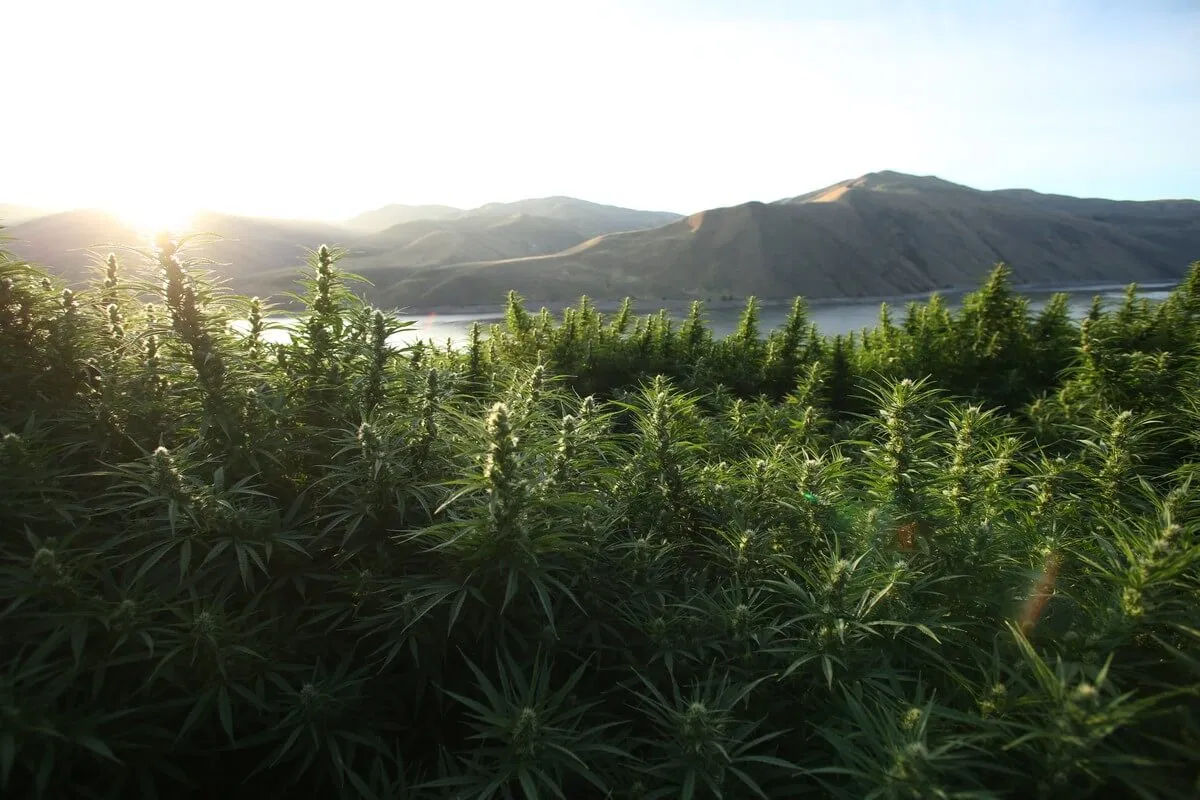
Spectrum Hemp Farm, Huntington, Oregon. Licensed under CC BY-SA 4.0 (https://creativecommons.org/licenses/by-sa/4.0/)
What’s the Difference Between Cannabis and Hemp?
All weed, whether hemp or cannabis for smoking, is known scientifically as cannabis sativa. Sometimes the terminology of the plants is confusing to people, so allow us to clarify.
Are hemp and marijuana the same plant?
Yes! Hemp and marijuana both come from the cannabis plant genus, most commonly Cannabis sativa. While people often use the terms interchangeably, they aren’t exactly the same thing. The difference isn’t in the species itself, but in how the plant is cultivated and its chemical makeup.
What separates hemp from marijuana?
The main difference comes down to THC content. Hemp is legally defined as cannabis containing less than 0.3% THC, making it non-psychoactive. “Marijuana” is the term often used for cannabis varieties bred to contain higher levels of THC, the psychoactive component. Most modern marijuana is grown as sinsemilla, meaning seedless female plants cultivated specifically to maximize cannabinoid potency. What’s confusing it that “cannabis” can refer to either. Let’s keep it simple, and say that the stuff we smoke is simply, weed!
In simple terms:
Hemp = low-THC cannabis, non-psychoactive
Marijuana, weed, ganja, etc = high-THC cannabis, psychoactive effects
Marijuana is typically grown from female cannabis plants cultivated specifically for potent, resin-rich flower. Hemp, on the other hand, can include both male and female plants and is often grown for CBD, fiber, seeds, and other industrial or wellness uses.
Can you get high off hemp?
No, you can’t get high from hemp flower because the THC levels are extremely low. However, hemp may still offer relaxing or pain-relieving benefits thanks to CBD and other cannabinoids. Many people turn to hemp-derived products for therapeutic support without the psychoactive effects of marijuana.
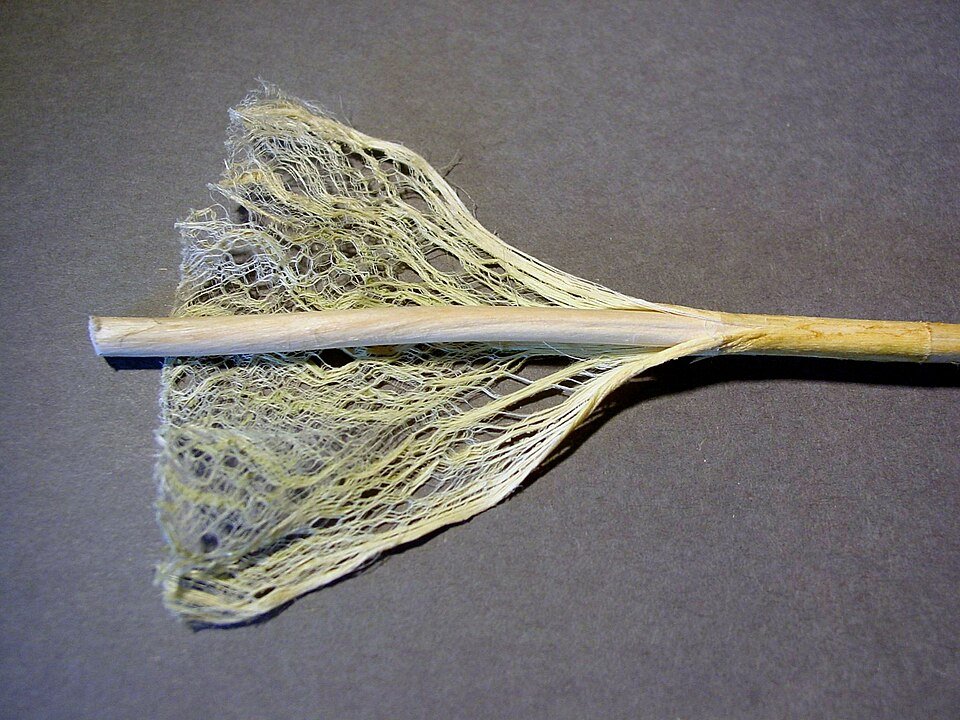
Hemp Fiber straight from the stalk
Hemp Around the World
Asia
The story of this iconic plant begins in Asia. Hemp was one of the earliest cultivated crops, dating back to the Neolithic period. Archaeological discoveries, including hemp textiles recovered from Zhou Dynasty graves, show that its use in fabric production stretches back thousands of years.
China pioneered hemp’s use in early papermaking, creating some of the first paper from hemp fibers, a breakthrough that would later transform global communication. Ancient Chinese texts also contain some of the earliest recorded references to hemp for medicinal purposes, including its use for digestive health, insomnia, menstrual relief, and anxiety. Agriculturally advanced for its time, China even utilized hemp ash to enrich soil, demonstrating a sophisticated understanding of sustainable farming practices.
Hemp was also referenced in the Vedas, the sacred scriptures of Hinduism, where it was described as “sacred grass” believed to relieve distress. In India, hemp extracts were used to treat hemorrhoids, diarrhea, and epilepsy.
Long before hemp spread across continents, Asia laid the foundation for its agricultural, industrial, and medical legacy and set the stage for its global impact.
Europe
Hemp was written about in The Natural History by Pliny the Elder in 77 CE, right in the peak of the Roman Empire. He stated “A decoction of the root in water relaxes the joints’ contractions and cures gout and similar maladies. It is applied raw to burns, but it must be frequently changed so as not to let it dry.”
The Gutenberg Bible, printed around 1450, was the first major book produced in Europe using a mechanical movable-type printing press. This breakthrough sparked the Gutenberg Revolution, dramatically increasing access to books and helping expand literacy beyond the wealthy elite. Before the printing press, books were rare, handwritten, and too expensive for most people to own.
So where does hemp come in? The Gutenberg Bible was printed with paper made from a mix of hemp and linen rags. As books became easier to produce, ideas spread rapidly across Europe. This surge in printed material later fueled movements like the Protestant Reformation, when figures such as Martin Luther circulated critiques of the Catholic Church.
In that sense, industrial hemp played a quiet but meaningful role in the material foundation of one of history’s most transformative intellectual shifts.
Africa
Indian and Arab traders introduced hemp to Africa, where it quickly became part of medicine, spirituality, and daily life. Medical applications travelled from China, through the Middle East and finally Egypt.
An Egyptian papyrus from 1500 BC records hemp ointments used to treat sores and swelling. Hemp pollen was even found on the mummy of Ramesses II, suggesting it may have been used as an offering.
Strong hemp ropes were also used in Ancient Egypt, so it is theorized that these durable fibers were responsible for moving the gigantic limestones that built the pyramids! Hemp appears in many iconic moments in human history, in silent but supportive ways.
As hemp spread across Africa, many tribes used it ceremonially. Burning it as incense, infusing it into ritual drinks, and incorporating it into spiritual practices were all very common. Hemp seeds were also ground into flour or pressed for oil, making the plant both sacred and practical.
The Americas
Cannabis is not native to the Americas, it was introduced during Spanish and British colonization in the 1600s. Not to be confused with Apocynum cannabinum, often called dogbane or Indian hemp, which is poisonous.
Hemp seeds were brought over for the same industrial purposes they served in Europe, and the crop quickly spread throughout the continent. Hemp fiber was essential for producing rope, sails, fishing nets, clothing, and paper. These materials were critical for trade, shipping, and early settlement.
In fact, hemp was so valuable that Massachusetts farmers were legally required to grow it or face fines. So, cannabis has been grown in the North Shore for longer than you’d think! In Virginia, farmers were even allowed to pay their taxes with hemp instead of normal currency.
Because hemp was used to make the sails and rigging that powered naval ships and merchant vessels, you could argue that early American infrastructure and expansion were quite literally tied together with hemp fiber.
Even prominent American figures grew hemp. George Washington cultivated it at Mount Vernon, and other founding fathers, including Thomas Jefferson, were known to farm the crop as well. While there’s no solid evidence that they smoked cannabis recreationally, hemp undeniably played an important economic and agricultural role in early American history.
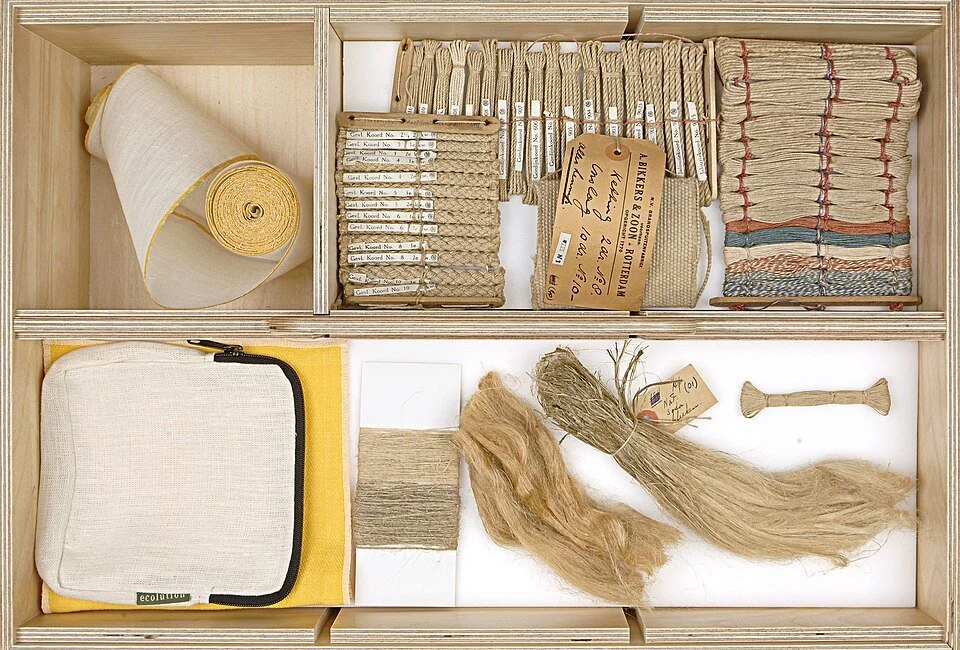
Textielmuseum cabinet 12 — via Wikimedia Commons, licensed under CC BY-SA 4.0 (https://creativecommons.org/licenses/by-sa/4.0/)
Is Hemp Good for the Environment?
Yes! Hemp is a multifaceted resource. Not only can it be made into paper, clothing, sustainable plastic, fuel and fertilizer, but it also gives back to the earth!
Soil benefits
Hemp can be extremely beneficial for farm land. Through a process called phytoremediation, hemp can absorb heavy metals and toxins from contaminated soil, helping restore damaged land. Hemp’s fast growing, deep root systems also help protect land from erosion by stabilizing and improving soil structure.
Hemp was even planted near Chernobyl’s nuclear site for this reason. It might not be able to heal such massive radioactive damage, but people hoped that hemp may have the ability to cleanse radiation out of the contaminated environment.
Low water use & pesticide needs
Hemp has always been a sustainable and profitable crop for farmers because it doesn’t need as much water or pesticides as other crops. Flax and cotton require a lot more care, but hemp is sturdy enough to grow almost on its own. Hemp also grows densely, reducing the chance for invasive weeds to take away its nutrients.
In regenerative agriculture systems, hemp is valued as a rotational crop that supports soil rebuilding and biodiversity. Its leftover plant matter (biomass) can be returned to the soil as organic material, improving nutrient cycling. Hemp is also being explored for use in sustainable building materials like hempcrete, further extending its environmental benefits beyond the farm.
High-protein, omega-rich food for livestock and humans
Hemp seeds contain all nine essential amino acids, omega-3 and omega-6 fatty acids, fiber, and minerals. This makes it highly nutritious for livestock and humans. You can use the seeds for cooking oil, protein powder or animal feed. This gave farmers the ability to supply their animals and their family with necessary nutrients.
Hemp Helps Heal
Using hemp as a resource would greatly reduce the worsening climate impacts of plastic and other chemically derived materials. Hemp is natural, and doesn’t produce the same kind of toxins. Hemp can actually be made into a bio-degradable plastic, but it’s not always as durable as normal plastic.
That’s actually kind of a good thing. Plastic stays in our ecosystems for up to 1000 years! It greatly damages our oceans, animal habitats, and forests. Barbie dolls will still be in their dreamhouses when we are long gone! Hemp plastic is meant to degrade over time, so it doesn’t contribute to the toxic pollution of the Earth.
Next time you go shopping for clothing, make sure to check what material it's made from. In the 21st century, clothing plummeted in long-lasting quality. Fibers like cotton and wool seem less popular, and instead fast fashion brands rely on material like nylon and polyester. These are less breathable, retain odor, and are not ideal for sensitive skin. It's a cheap and rapid production way to get clothes on the fashion market. Polyester is especially subpar, as it is basically fabric plastic. So every thread you put on sheds microplastics into your skin!
Consider adorning yourself with clothing made from hemp. We promise, not all hemp clothing looks like burlap sacks and drug rugs! Hemp is durable, breathable, and very eco friendly. Just by going about your day and choosing to wear hemp fibers helps the environment, and your body will thank you.
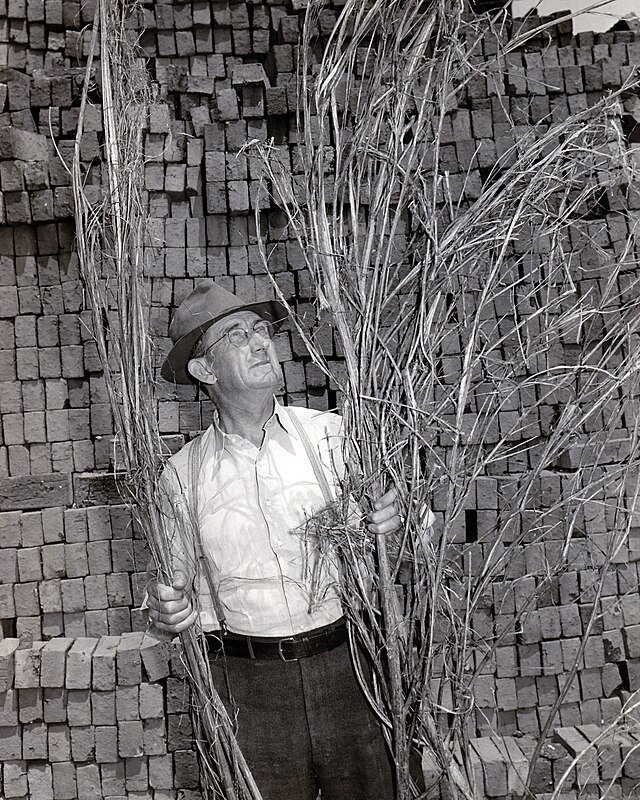
Joe Burton, Kentucky hemp farmer with hemp — via Wikimedia Commons, licensed under CC BY-SA 4.0 (https://creativecommons.org/licenses/by-sa/4.0/)
Why did Hemp Production Decline in the 20th Century?
Post prohibition, anti-drug sentiment was rising rapidly. In the 1930s, people began conflating psychoactive weed and hemp as the same thing, despite being cultivated for very different reasons. Lawmakers often failed to distinguish between low-THC hemp and high-THC cannabis, and sadly many still do to this day.
A big push for this rhetoric was due to racism. Media campaigns popularized the term “marijuana”, rather than referring to it as its scientific name, cannabis. This was done purposefully, so people would relate smoking cannabis to Mexican immigrants. The agenda was also pushed to demonize Black jazz musicians. This irrational manic sparked many anti-drug propaganda films, like the cult classic Reefer Madness. The careless confusion laid the groundwork for massive cannabis reform that ended up targeting industrial hemp as well.
1937 Marihuana Tax Act
The first national regulation of cannabis did not make it illegal, but rather placed a tax on it. Unfortunately for farmers, there was no distinction between hemp and smokable cannabis. Hemp farmers were burdened with costly registration requirements and legal risks. As a result, domestic hemp production sharply declined.
Hemp’s Demonization During the War on Drugs
In the Controlled Substances Act of 1970, cannabis was classified as a Schedule 1 drug. These drugs are said to have high risk for abuse and no medical application. Again, hemp was carelessly not distinct from marijuana under this federal law. This effectively ended legal hemp cultivation in America until the 21st century.
Thanks a pantload, Nixon.
What is the 2018 U.S. Farm Bill?
The Agriculture Improvement Act of 2018, commonly known as the Farm Bill, was a major piece of U.S. legislation that included significant changes to hemp policy. One of its most impactful provisions officially separated hemp from marijuana under federal law by removing hemp from the Controlled Substances Act. Hemp was redefined as cannabis containing less than 0.3% THC, making it legal for licensed farmers to cultivate nationwide. This also legalized hemp-derived products, including CBD, at the federal level as long as they meet strict THC limits.
Separately, federal regulators have proposed reclassifying cannabis from Schedule I to Schedule III under the Controlled Substances Act. While this potential change would ease certain research and tax restrictions, it has not yet been fully enacted, and cannabis containing more than 0.3% THC remains federally illegal as of now.
While the 2018 Farm Bill legalized hemp federally, ongoing federal and state debates continue over how hemp-derived cannabinoids should be regulated. Lawmakers have considered tightening definitions and oversight, but federal hemp legalization remains in place.
Hemp’s Past, Present, and Potential
When we smoke cannabis, we have to pay homage to how far hemp has progressed in society. People across the globe not only used it, they relied on it. Cultivation of hemp directly coincides with huge leaps of intellectual and agricultural progress. Some of the world’s first books, pottery, clothing, and ropes were all made from hemp.
This plant is unbelievably versatile! There’s a reason why it was used all over the world. Beyond textiles and clothing, hemp production marked huge increases in medicine. People even went as far to call hemp the antidote for all ailments.
Cannabis is a magical plant, and its capabilities go far beyond producing blissful highs. Remember that the anti-fungal, anti-bacterial, anti-inflammatory, pain relieving, sedative, and mood regulating qualities do not come from THC. They come from the cannabis plant, the whole plant.
THC is fantastic because of how it integrates with every other part of the plant. Not only can it make you stoned and happy, but it can have remarkable holistic effects. These can also be achieved without any psychoactive effect.
We highly encourage our guests and beloved readers to explore the benefits of the cannabis plant outside of getting high. Whether you use CBD based tinctures and salves, you’re exploring the durable quality of hemp fabric, or you like to roll fatties with hemp based paper, we hope that you can find the positives of cannabis that can be integrated into your whole lifestyle. Ready to explore our selection? Visit Starbird in Salem, MA, or pre-order online for easy pickup.
Fly high!
FAQs: Global Hemp History
Are hemp and marijuana actually the same plant?
Yes—both come from cannabis (most commonly Cannabis sativa). The difference is how the plant is bred and used: hemp is grown for fiber, seed, and CBD, while “marijuana” typically refers to high-THC varieties cultivated for psychoactive effects.
What legally separates hemp from psychoactive cannabis?
In the U.S., hemp is defined as cannabis containing less than 0.3% THC. Cannabis above that threshold is treated differently under many laws and regulations, which is why the same genus can land in totally different legal categories.
Can you get high from hemp flower or hemp products?
Not in the typical sense—hemp’s THC levels are extremely low, so it won’t produce a strong “high.” Some people still feel subtle effects from CBD and other cannabinoids, but it’s generally sought for non-intoxicating support.
Where did hemp’s global spread start, and why did it take off?
Hemp’s earliest major cultivation traces back to Asia, then expanded through trade routes into Europe and Africa, and later arrived in the Americas through colonization. It spread because it solved practical problems—strong fiber for rope and sails, useful seed and oil, and reliable material for textiles and paper.
Why did hemp production decline so hard in the 1900s, and what brought it back?
Hemp got swept into anti-cannabis laws when policymakers blurred the line between low-THC hemp and high-THC cannabis. In the U.S., that restriction eased dramatically with the 2018 Farm Bill, which federally re-legalized hemp (under the 0.3% THC definition) and reopened the door for farming and hemp-derived products.