
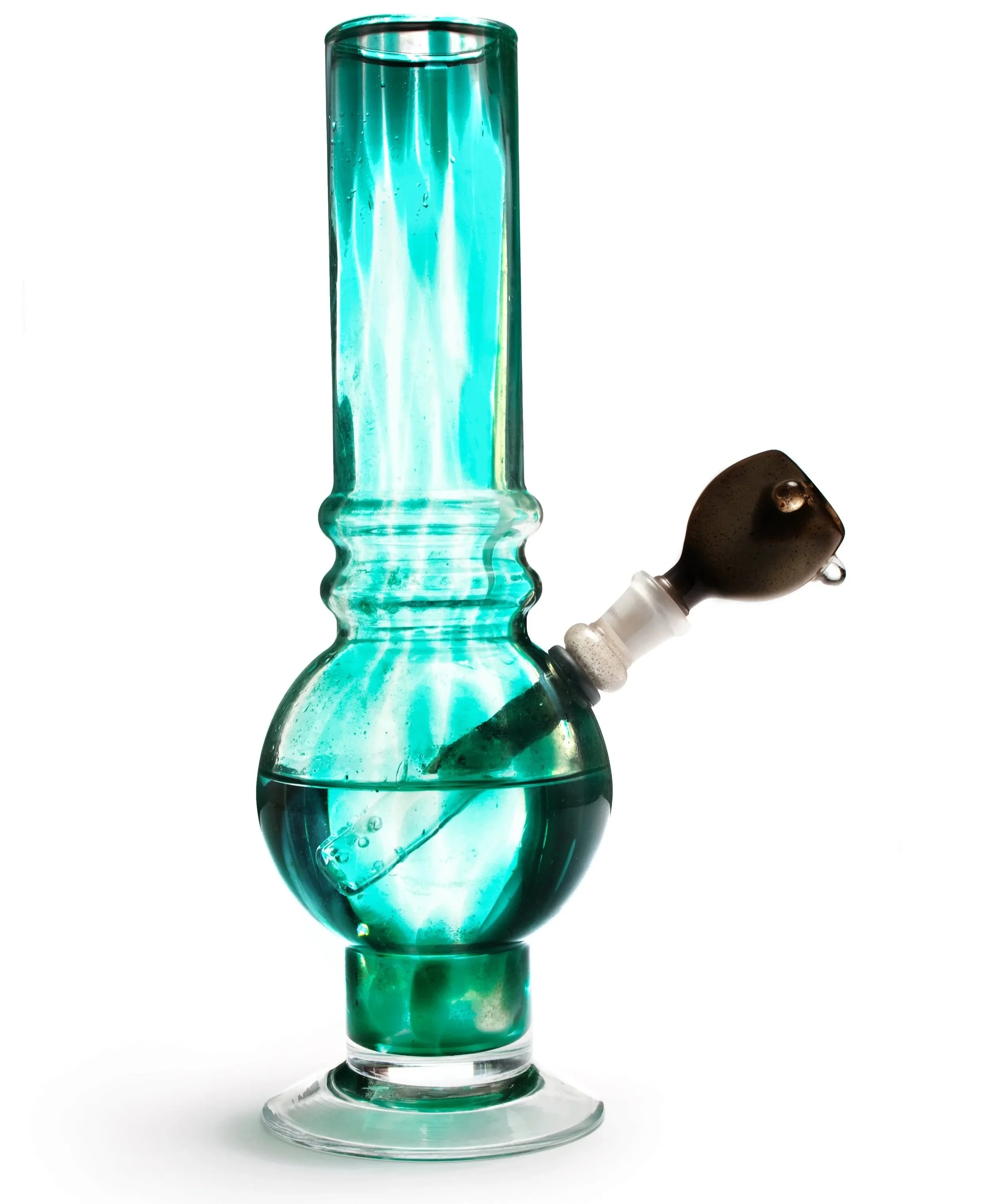
The right bong water level depends on the design. For a conventional bong with a downstem, start with enough water to cover the downstem’s lower opening or diffusion holes. Then test the draw without cannabis and make small adjustments until it bubbles freely without sending water toward the mouthpiece.
There is no universal number of ounces that works for every bong. A wide beaker, a narrow straight tube, and a small percolator piece can need different amounts of water to reach the same functional level.
Finding the Right Water Level
Place the bong upright on a stable surface and identify where air enters the water. Add clean water gradually until those openings are submerged. Keep water well below the bowl connection and mouthpiece.
Take a gentle test draw with the bowl empty. You are checking for bubbling, comfortable airflow, and splashback. If air passes through without bubbling, the relevant opening may still be above the water. If water reaches your mouth or the draw feels unusually resistant, the piece may be overfilled.
Use the manufacturer’s fill line or directions when provided. Session Goods’ filling instructions emphasize covering the downstem openings and testing the draw. The goal is a working water level for the piece.
Identify the Downstem or Percolator
The downstem is the tube that carries air from the bowl connection into the water. Some have a single opening; others have several small slits or holes near the lower end. Those are the openings you need to identify.
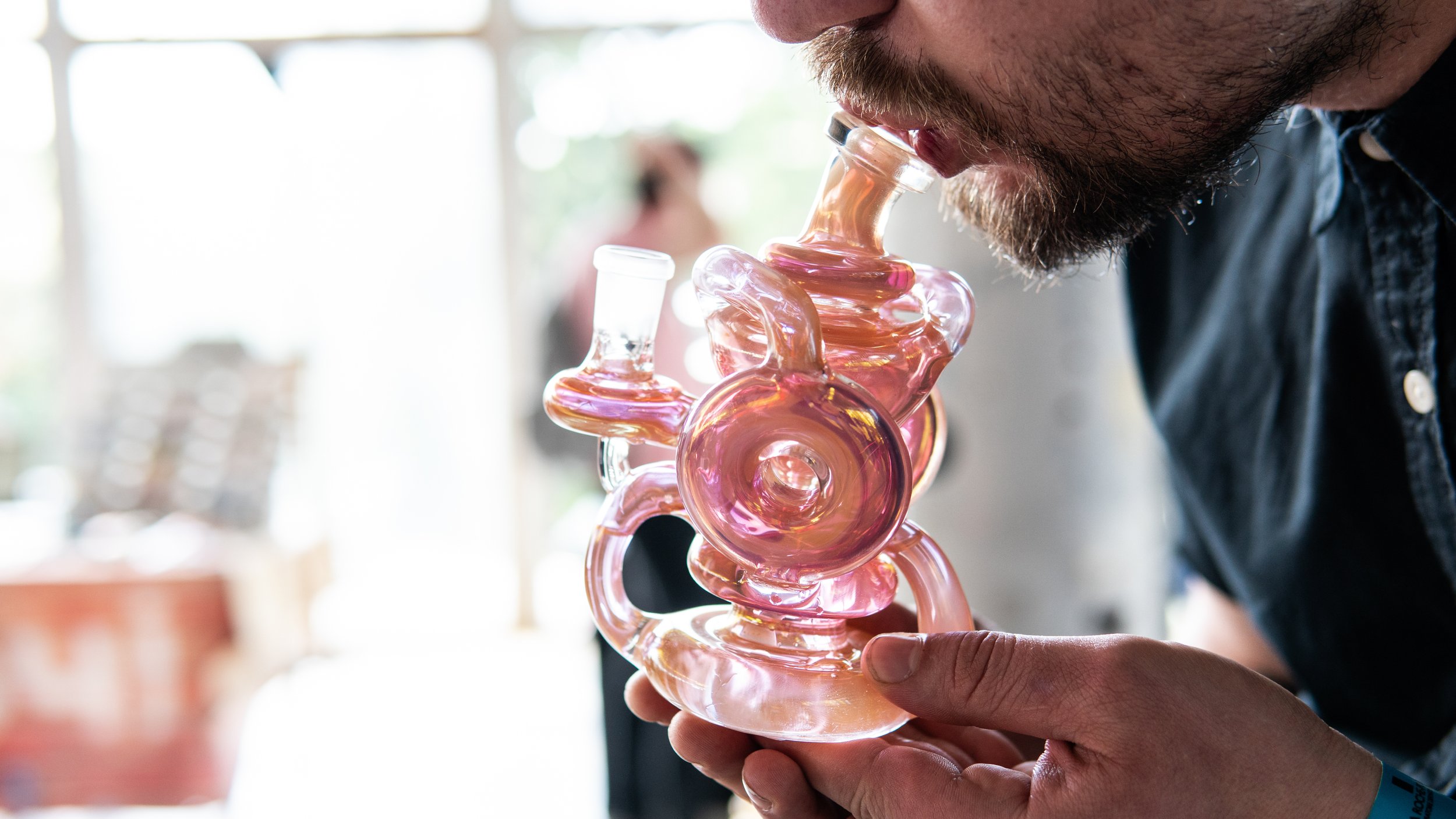
A percolator is an internal structure that divides airflow through water. It might look like a small disc, a group of tubes, or another glass assembly. Some pieces have a fixed percolator instead of a removable downstem.
Follow the directions for the actual airflow path. The end of a decorative glass tube is not necessarily the point that needs to be submerged.
Too Little vs. Appropriate vs. Too Much Water
Too little water: The downstem or relevant diffusion openings remain exposed. Air may bypass the water, and the piece may not bubble as designed.
An appropriate water level: The intended openings are covered, the piece bubbles during a gentle test draw, and water stays out of the mouthpiece and bowl connection.
Too much water: The draw can become difficult, and water may travel into the neck or splash toward the mouthpiece. Adding more water beyond what the design needs does not automatically improve the experience.
Water can cool smoke, but it does not make smoking harmless or remove the need to consider smoke exposure.
Adjusting for Different Designs
Beaker bongs: The wider base can take more water to reach the downstem than a narrower chamber. Judge the level against the actual openings rather than comparing it with a straight tube.
Straight tubes: A smaller change in water volume can move the level noticeably. Add water in small amounts and keep checking the draw.
Compact pieces and bubblers: Their short distance between the water and mouthpiece can make overfilling more noticeable. A large fill amount from another piece is not a useful starting point.
Multiple percolators and recyclers: Water may move between chambers during a draw. Use the instructions for that model rather than trying to fill every chamber to the same height. Gravity-style devices operate differently and need their own filling instructions.
If you add ice to a design that allows it, melting ice can raise the water level. Check the level again as the ice melts.
Troubleshooting Splashback and Difficult Draws
Start with an empty-bowl test. Remove a little water, return the bong to its normal upright position, and try a gentle draw again. Pulling harder can create splashback even when the starting level seems reasonable.
If airflow remains difficult after adjusting the water, check for a blocked downstem, clogged percolator, or dirty bowl. Water level is only one possible cause. A regular routine for how to clean your bong helps keep residue from narrowing the air path.
Forcing a stuck glass component can break it. Follow the manufacturer’s care directions or ask about the piece before attempting to remove it.
When to Change the Water
Use fresh water for each session and empty the piece afterward. Leaving old water in the chamber adds stale odor and makes the next cleaning less pleasant.
Changing the water does not remove residue from the glass. Follow the care instructions for the manufacturer and materials; GRAV’s glass-care guidance is one example of how cleaning directions can depend on the piece.
Clean equipment and appropriate water levels are separate from choosing cannabis flower. Both deserve attention, but neither makes a smoking format free of health risks.
FAQs
How much water do you put in a bong?
For a conventional downstem design, use enough to cover the intended lower openings, then test the draw without cannabis. Follow any manufacturer fill line or model-specific instructions.
Should bong water cover the whole downstem?
No. The relevant lower opening or diffusion holes need water coverage, not the full length of the stem. Keep water out of the bowl connection.
Why am I getting bong water in my mouth?
Overfilling, a forceful draw, tilting the piece, or water movement in a compact design can cause splashback. Adjust gradually and test with an empty bowl.
Can a dirty bong feel overfilled?
Residue can restrict airflow even when the water level is appropriate. Check and clean the air path before assuming more water adjustment will solve it.
Should I leave water in a bong between sessions?
Empty it after the session and start with fresh water next time. Let the cleaned piece dry before storing it.