
Massachusetts Cannabis Testing: What THC Labels Do—and Don’t—Tell You
Walk into a Massachusetts dispensary and nearly every cannabis product comes with numbers attached to it. THC percentage. Total cannabinoids. Testing dates. Batch numbers. Sometimes terpene results. For many shoppers, those numbers can feel like a laboratory-certified scorecard for exactly what is inside the package. But the reality is much more complex.
Massachusetts requires cannabis and cannabis products to undergo testing before they can be sold to consumers. That testing plays an important role in screening for contaminants and providing information about cannabinoid potency. But laboratory testing is still based on samples taken from much larger production batches.
It does not mean that every individual flower in a jar was tested, that a passing product contains absolutely zero contaminants, or that a flower testing at 30% THC is automatically better than one testing at 20%.
Recent actions by the Massachusetts Cannabis Control Commission, including retail shelf audits, enforcement cases involving laboratories, new disclosure requirements, and an ongoing overhaul of the state's testing regulations, have also shown why understanding the limitations of a cannabis label matters.
Here is what Massachusetts cannabis testing actually tells you, what it does not, and how to use those numbers more intelligently when shopping.
What Massachusetts Cannabis Testing Is Designed to Do
Before regulated marijuana and marijuana products can be sold in Massachusetts, they must undergo required testing through a licensed Independent Testing Laboratory, commonly called an ITL.
The Cannabis Control Commission requires testing for cannabinoid content as well as contaminants including heavy metals, pesticides and plant growth regulators, microbiological contaminants, mycotoxins, and, when applicable, residual solvents. Additional testing requirements can apply to particular product types.
The goal is not to prove that a product is chemically perfect. Testing is designed to determine whether a representative sample from a production batch complies with the limits and requirements established by Massachusetts. Each state with legal recreational cannabis has different variations and restrictions on their testing laws, and Massachusetts has particularly high standards.
A laboratory result describes the material that was sampled and analyzed. Regulators then use that sample as evidence about the larger batch it represents.
Heavy Metals, Pesticides, Mold, Yeast, and Other Contaminants
For too long, the cannabis industry in Massachusetts has been like the Wild West with testing standards; unpredictable and varied. This lack of consistency meant that you, the savvy consumer, were left playing a guessing game about product potency and safety. Recognizing this, the CCC is stepping in with new guidelines designed to tighten up accuracy and reliability across the board.
A Passing Test Does Not Mean Zero Contaminants
Laboratory testing works with detection limits and regulatory action limits.
Imagine a contaminant is permitted below a particular threshold. A result below that threshold can pass even if a laboratory detects some measurable amount of the substance. Similarly, a laboratory may report a substance as below its quantifiable limit when the amount present is too low for that testing method to measure reliably.
In fact, one of the Cannabis Control Commission's 2026 testing proposals specifically addressed how laboratories should report results that are below the quantifiable limit. The proposal recommended reporting a zero in the state's tracking system while also recording that the result was below the laboratory's limit of quantification.
That illustrates an important point about laboratory data: zero on a report does not always mean the scientific equivalent of "nothing exists."
It may mean nothing was detected, or it may mean any amount present was beneath the method's reliable measurement threshold.
The more useful question is whether the product complied with Massachusetts' established safety limits.
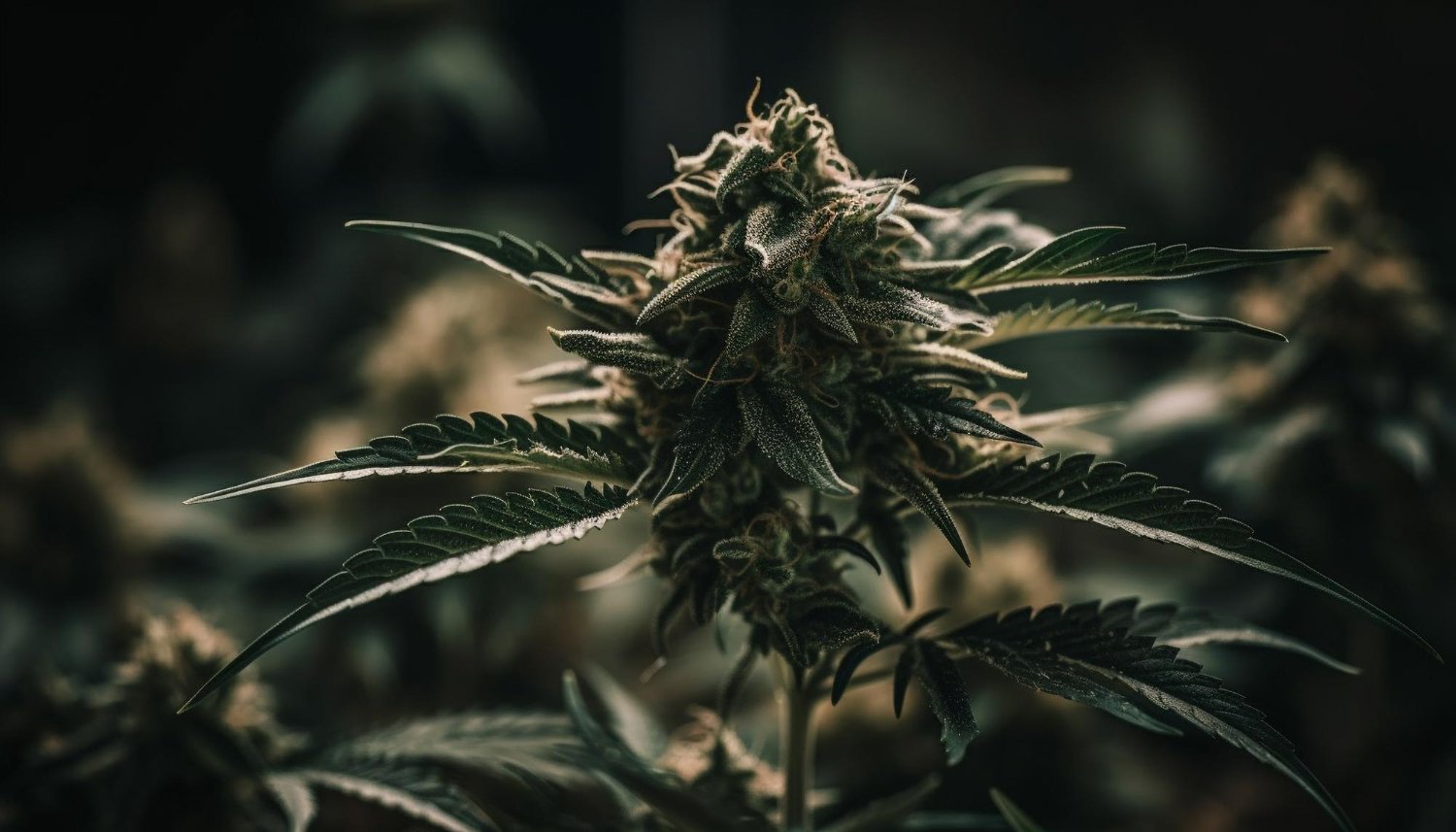
How One Sample Can Represent Up to 15 Pounds of Cannabis
One of the most misunderstood parts of cannabis testing is the scale of the production batch.
For cured and dried flower in Massachusetts, a strain-specific post-harvest batch can contain up to 15 pounds of dry flower, shake, or trim. A test sample is then created to represent that batch.
Fifteen pounds is approximately 6,804 grams.
That could eventually become more than 1,900 individual 3.5-gram eighths.
The laboratory obviously does not test all 6,804 grams.
Instead, Massachusetts' testing framework depends on representative sampling.
Who Collects the Sample and What “Representative” Means
Under the Commission's testing protocol, the licensee is responsible for developing and documenting sampling procedures capable of producing representative samples. Each production batch must be sampled, and the material submitted for testing should accurately represent the larger batch.
For finished cannabis flower, that means sampling should account for the fact that flower is naturally heterogeneous.
One bud can differ from another.
Cannabinoid concentrations may vary from plant to plant, branch to branch, and even within the same flower. Moisture content, maturity, trichome density, storage conditions, and physical location within a batch can also contribute to variation.
The Commission's protocol specifically acknowledges this problem. It requires flower samples to be representative of the maturity and composition of the entire production batch and discusses combining material from different portions of a batch when creating a sample.
That is what "representative" means in this context.
The laboratory is not claiming that every bud contains exactly the same THC percentage as the sample.
It is testing material intended to reasonably characterize the batch as a whole.
Your Individual Bud Was Probably Not the Bud Tested
When you buy an eighth of cannabis flower, there is no reason to assume that the exact bud sitting in your container was physically analyzed by the laboratory.
It almost certainly was not.
The lab tested a sample from the production batch associated with your product.
That distinction helps explain why two containers from the same tested batch can look, smell, smoke, or even test somewhat differently from one another.
Cannabis is an agricultural product. Unlike a bottle of distilled liquid that can be thoroughly mixed into a nearly uniform solution, a batch of cannabis flower contains thousands of individual biological structures.
Massachusetts' own testing protocol notes that completely homogenizing finished flower before sampling is difficult because of the heterogeneous nature of the material.
The number printed on the package is therefore best understood as a laboratory measurement associated with the batch, not a molecular guarantee for every piece of flower inside every jar.

What the CCC Found When It Tested Products From Store Shelves
In 2026, Massachusetts regulators decided to look at cannabis from the opposite end of the supply chain.
Instead of relying only on the compliance test performed before products entered stores, the Cannabis Control Commission selected flower products that were already sitting on dispensary shelves and had them tested again for THC potency.
The Commission selected 63 cannabis flower products from 62 producers.
Thirteen samples fell outside the Commission's acceptable potency range and were classified as noncompliant. Seven products tested within two percentage points of their labeled potency. The remaining products fell within the state's compliance range.
For the audit, the Commission determined that an observed potency between 75% and 125% of the labeled value would be considered substantially compliant.
That is a wider range than many consumers might expect.
A flower labeled at 20% THC, for example, could test between 15% and 25% THC under that framework and remain within the Commission's stated compliance range for the audit.
How the Blind Retesting Worked
The easiest way to think about the program is as a regulator-directed shelf audit.
The CCC selected finished flower products from Massachusetts retailers and medical dispensaries and sent the products through independent laboratory testing to verify the potency shown on the label.
You may see programs like this described broadly as "blind testing." Massachusetts regulations also provide for standards-laboratory testing in circumstances where the Commission can conceal the source of a product from the laboratory.
However, the Commission's public summary of the 63-product potency audit does not describe every procedural detail of the audit as a fully blinded scientific study.
So it is more accurate to call it an independent shelf audit than to assume every possible variable was blinded.
What matters most is that regulators tested products taken from the retail market rather than relying solely on the original compliance result.
What the Results Prove and What They Cannot Explain
The audit proved something fairly straightforward:
For some products on Massachusetts shelves, the THC potency measured during the Commission's audit differed substantially from the potency printed on the package.
Thirteen of 63 samples fell outside the state's acceptable range.
What the audit does not automatically tell us is why.
Differences could potentially involve sampling variation, differences between pieces of flower, moisture changes during storage, degradation over time, laboratory methodology, original sampling practices, or inaccurate original results.
The audit alone cannot identify the cause in every case.
It is also important to understand that this particular shelf audit examined potency accuracy. It was not a 63-product investigation proving that those same products did or did not contain mold, pesticides, or heavy metals.
The CCC has said it intends to move toward additional random testing for contaminants of concern including pesticides, heavy metals, yeast and mold, and bacteria.
Can Remediated Cannabis Be Sold in Massachusetts?
Yes, under certain circumstances cannabis that has undergone remediation can ultimately be sold in Massachusetts if the process complies with state requirements and the product subsequently satisfies the applicable testing requirements.
"Remediation" generally describes a process used after cannabis has failed a compliance test to address the reason for the failure.
For example, microbial contamination may sometimes be reduced through treatment.
A pesticide failure is treated differently and is not simply something that can be cleaned up through ordinary remediation.
Under the Commission's testing protocol, cannabis that fails contaminant testing may be subject to reanalysis, remediation followed by another full-panel test, or destruction, depending on the circumstances.
Sanitization Before Testing Versus Remediation After Failure
There is an important difference between sanitization and remediation.
Sanitization can occur before the original compliance test.
A cultivator might use a treatment intended to reduce microbiological contamination before the product is ever submitted to the lab.
Remediation happens after a product has failed testing.
In 2025, the Cannabis Control Commission issued Administrative Order No. 5 establishing disclosure and tracking requirements for both pre-testing sanitization and post-failure remediation.
The Commission specifically identified treatments such as irradiation and ozone as examples of processes that may qualify as sanitization or remediation depending on when and why they are used.
Neither word automatically means a product is unsafe.
The important questions are why the treatment occurred, whether it was properly documented, and whether the finished product subsequently met Massachusetts testing requirements.
What Must Be Disclosed and What Customers May Not See
Under Administrative Order No. 5, licensees that apply a sanitization treatment before compliance testing must disclose that treatment to the Independent Testing Laboratory.
The same tracking requirement follows products that have undergone remediation after a failure.
The sanitization or remediation designation must be recorded in Metrc, Massachusetts' seed-to-sale tracking system, and communicated to the testing laboratory. The status is also reflected through the Certificate of Analysis process.
That does not necessarily mean a shopper will see the word "remediated" prominently printed across the front of a retail package.
The regulatory tracking system can contain more information than appears on the consumer-facing label.
That is one reason Certificates of Analysis, or COAs, are becoming increasingly important. The Commission describes a COA as the record documenting mandatory testing for a particular batch or lot.
Massachusetts has also been working toward making digital COAs more accessible to consumers and patients through Metrc.
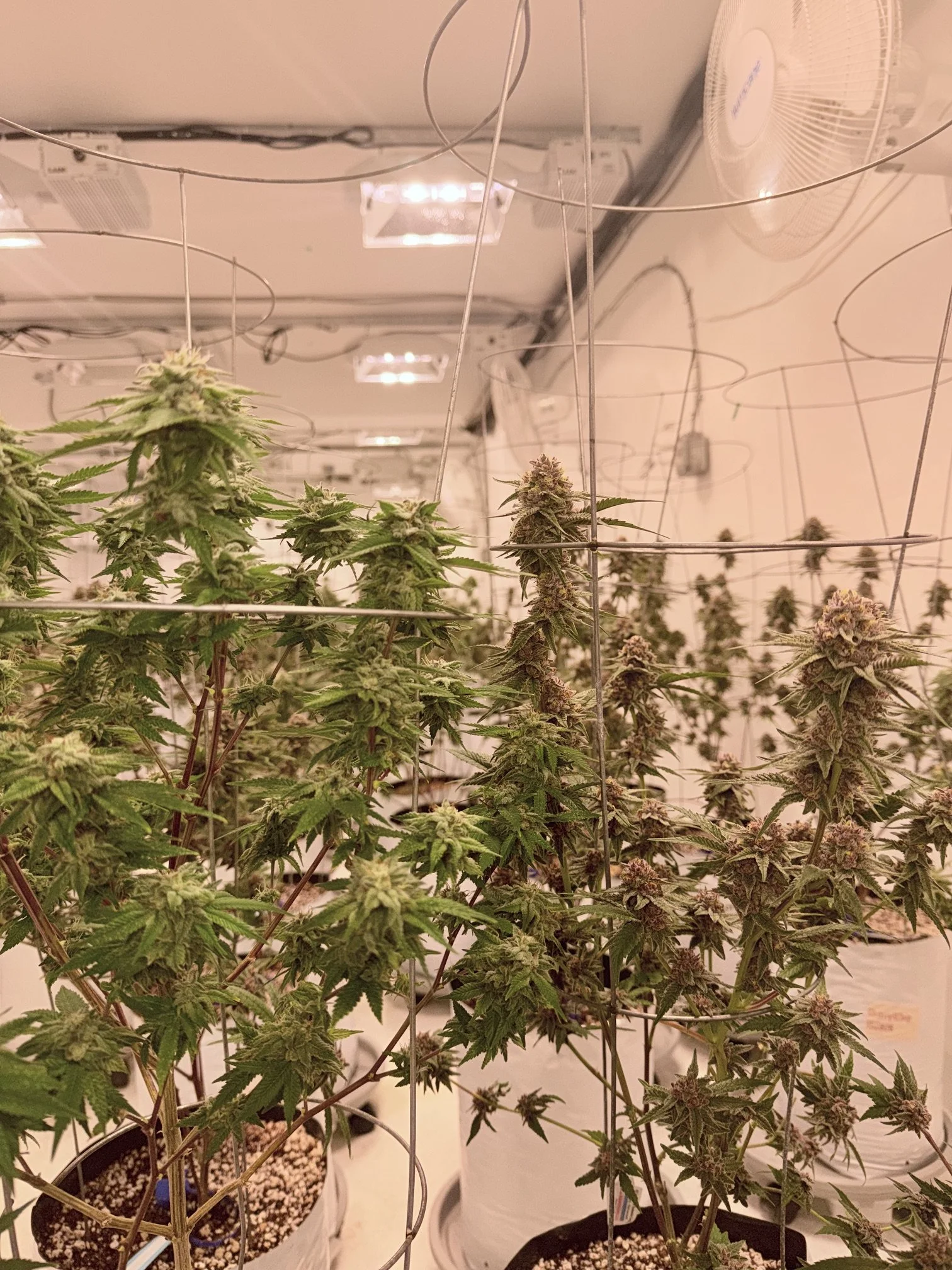
Starbird’s Grow Facility
What Complaints and Enforcement Records Reveal
Testing rules are only part of the picture.
Enforcement records show what happens when the system does not operate as intended.
One of the most significant recent Massachusetts cases involved Assured Testing Laboratories.
Commission enforcement documents stated that between April 1, 2024 and April 15, 2025, hundreds of failing laboratory samples were not properly reported to the Commission. The order described Total Yeast and Mold failures being entered as zero or "not tested" and identified reporting problems involving other testing categories as well.
The CCC later issued public-health advisories involving cannabis products connected to the investigation. One 2025 advisory referenced 544 laboratory samples that had previously failed Total Yeast and Mold testing.
In a separate 2025 advisory, the Commission identified products that had previously passed required compliance testing but later produced samples exceeding established yeast, mold, or coliform limits during additional testing.
These cases should not be interpreted to mean that every Massachusetts laboratory result is unreliable.
They show something different.
Laboratory oversight matters just as much as laboratory requirements.
A strong testing program needs good sampling, validated methods, accurate reporting, independent oversight, data audits, enforcement, and the ability to retest products already in the marketplace when regulators see a reason to investigate.
Why the Highest THC Percentage Is Not a Quality Guarantee
Its easy to walk into a dispensary and request the highest testing preroll, but you might not get the optimal result for your experience by selecting that way. Even if every THC number on every package were perfectly accurate, shopping exclusively by THC would still be a poor way to judge cannabis quality.
THC percentage tells you one thing:
How much THC was measured in the tested sample.
It does not tell you whether the flower was properly dried and cured.
It does not tell you whether the flower smells expressive or flat.
It does not tell you whether the trichomes were preserved.
It does not describe the entire terpene profile.
It does not tell you how recently the flower was packaged.
And it cannot reliably predict exactly how enjoyable the experience will be for you.
At Starbird, THC percentage is one of the least of our concerns when it comes to picking out a quality bud. A properly grown 20% THC flower with strong aroma, good moisture content, abundant trichomes, and a terpene profile you enjoy may offer a more satisfying experience than dry, muted flower carrying a much larger THC number.
Potency matters, but it is not the same thing as quality.
The CCC's decision to conduct a potency audit reflects another problem with treating THC as a quality score: higher-THC flower often commands higher prices, creating an economic incentive around the number itself. The Commission specifically cited the relationship between THC levels and market pricing when announcing its 2026 audit.
Once a single laboratory result becomes both a regulatory measurement and a marketing claim, accuracy becomes especially important.
How to Read a Cannabis Label and Ask Better Questions
Instead of looking only for the largest THC percentage, treat the label as one part of a much larger picture. Here’s how to choose cannabis flower without relying on just THC.
Start with the batch and testing information. The batch number connects the package to the production and testing records associated with that cannabis.
Look at the testing date. Cannabis changes over time. THC can degrade, volatile aromatic compounds can dissipate, and flower can gain or lose moisture depending on packaging and storage.
Look at total cannabinoids, not only THC. The plant contains a much larger chemical profile than a single compound.
If terpene data is available, use it to understand the aromatic profile rather than treating cannabis terpenes as another set of numbers to maximize. THC percentage versus terpenes opens an entire spectrum of knowledge to explore that will aid your cannabis selection.
Then look at the flower itself when possible.
Does it appear excessively dry?
Does it have a strong and distinct aroma?
Does the cultivar smell the way you expect?
Was it grown by a producer whose flower you have enjoyed before?
You can also ask your budtender questions that go beyond "What has the highest THC?"
Try asking:
What flower came in recently?
Which cultivators have been especially consistent lately?
Which strain has the strongest aroma right now?
Do you know whether this batch was remediated or sanitized?
Can I see the Certificate of Analysis?
What does the terpene profile actually smell like?
Those questions can tell you considerably more about what you are buying than simply comparing 27% THC to 31% THC.
Furthermore, many people become easily confused when reading THC and THCA. THCA is the raw, non-intoxicating precursor found in fresh cannabis flower. When you heat it by smoking, vaping, or cooking, it converts into THC through decarboxylation.
THC is the intoxicating cannabinoid responsible for the classic cannabis “high.”
For flower labels, THCA is often much higher than THC because most of the THC potential is still in its acidic THCA form before you consume it.
A common estimate for potential total THC is:
Total THC ≈ THC + (THCA × 0.877)
The 0.877 accounts for the molecular weight lost when THCA converts into THC.
What Massachusetts Is Changing About Cannabis Testing
Massachusetts' cannabis testing system is actively changing.
In April 2026, the Commission released an initial package of proposed testing-protocol revisions addressing microbial testing standardization, laboratory reporting, sampling, retesting criteria, pesticides, and other issues. Among the proposals was a requirement to better standardize how laboratory subsamples are homogenized and made representative of the original test sample.
The Commission also conducted its 2026 potency shelf audit, began publishing additional testing information, formed an internal testing task force, and announced plans for random contaminant testing.
Then, following the passage of Chapter 65 of the Acts of 2026, the Commission announced a broader review of Massachusetts testing rules and protocols.
As of September 2026, the agency is working toward creating a dedicated section of Massachusetts cannabis regulations specifically for testing. The stated goal is to bring testing standards together into a clearer and more consistent regulatory framework.
The Commission has also said it is requiring licensed laboratories to upload digital Certificates of Analysis after product tests and is working toward making those COAs more accessible to consumers and patients.
That may ultimately be one of the most useful changes for shoppers.
A package can only fit so much information.
A readily accessible COA can provide a much deeper look at how a particular batch was tested and what the laboratory actually found.
For more on the nitty-gritty of these testing standards, check out Talking Joints Memo. Shop cannabis flower in Salem at Starbird, the unique, boutique dispensary of the North Shore.
FAQs: Massachusetts Cannabis Testing
Does Massachusetts test every cannabis bud?
No. Massachusetts requires production batches to be tested, but laboratories analyze representative samples from those batches rather than testing every individual cannabis flower.
The state's testing protocol recognizes that it is not practical to test every piece of marijuana, which is why representative sampling is used to evaluate the larger production batch.
Can a testing sample represent 15 pounds of flower?
Yes. Massachusetts allows strain-specific post-harvest batches of cured and dried flower containing up to 15 pounds of dry flower, shake, or trim. A test sample is then created to represent that production batch.
Because a relatively small sample can represent a much larger amount of cannabis, proper representative sampling is an important part of the testing process.
Does a passing cannabis test mean there is no mold?
Not necessarily. A passing test means the sample that was analyzed complied with Massachusetts' applicable microbial testing requirements and established limits.
Laboratory testing involves detection limits, quantification limits, sample sizes, and regulatory thresholds. A passing result should not be interpreted as a guarantee that absolutely no mold organism exists anywhere in every gram of the production batch.
Does cannabis remediation have to appear on the package?
Massachusetts requires sanitization and remediation information to be documented through the state's testing and seed-to-sale tracking process, including communication with the testing laboratory and documentation associated with the Certificate of Analysis.
That does not necessarily mean the treatment will be prominently displayed on the front of the consumer package. If you want to know whether a particular batch was sanitized or remediated, ask the dispensary or request the product's Certificate of Analysis.
Does higher THC always mean better effects?
No. THC percentage measures potency in the sample that was tested. It does not measure overall flower quality or guarantee a particular experience.
Genetics, terpene profile, minor cannabinoids, freshness, cultivation, curing, dose, tolerance, and individual response can all influence how cannabis feels. THC is best treated as one piece of information rather than a quality score.