
THC Edibles Guide | How Cannabis Edibles Work
THC edibles give you a very different way to experience cannabis than smoking or vaping. Instead of cannabinoids reaching the bloodstream through the lungs, an edible is eaten or drunk, absorbed through the digestive system, and metabolized before its effects fully develop. That changes both the timeline and character of the experience.
The category has also grown far beyond brownies and gummies. Today's cannabis edibles in Salem can include chocolates, beverages, baked goods, mints, fast-acting products, low-dose options, and formulations combining THC with CBD, CBN, CBG, and other cannabinoids.
Understanding a few basics about metabolism, serving size, onset, and cannabinoid content makes that variety much easier to navigate.
THC edibles are foods, beverages, or ingestible products infused with tetrahydrocannabinol, the primary intoxicating cannabinoid found in cannabis. Gummies might be the most recognizable format, but THC can also be incorporated into chocolates, baked goods, beverages, mints, chews, capsules, and other products.
The THC inside an edible can also come from different types of cannabis extracts. Some products use distillate, while others incorporate full-spectrum extracts, live resin, or solventless extracts such as rosin. Products can also combine THC with other cannabinoids rather than building the entire formulation around THC alone.
For shoppers who want to understand the cannabinoid itself, the THC cannabinoid guide provides useful context for why THC produces intoxicating effects and how it interacts with the body's endocannabinoid system.
What Are THC Edibles?
How Do Edibles Work?
When you smoke or vape cannabis, THC enters the bloodstream primarily through the lungs. Eating THC takes a different route.
After an edible is swallowed, cannabinoids move through the digestive system and are absorbed before passing through the liver. During this first-pass metabolism, THC is converted into 11-hydroxy-THC, an active metabolite that contributes to the specific effects of edible cannabis.
That extra journey through digestion and metabolism helps explain two defining characteristics of edibles: they generally take longer to begin working and their effects can persist longer than inhaled cannabis.
It also means that two people consuming the same amount of THC can have noticeably different experiences. Dose matters, but metabolism, previous cannabis experience, stomach contents, individual biology, and other factors can also affect the response to an edible. The CDC similarly identifies THC concentration, method of consumption, previous cannabis experience, biology, and use of other substances as factors that can influence cannabis effects.
How Long Do Edibles Take to Kick In?
Patience matters with traditional edibles.
The CDC notes that intoxicating effects from cannabis edibles can take approximately 30 minutes to 2 hours to appear. CDC Controlled research with oral THC has also found that blood concentrations and subjective effects develop substantially more slowly than they do following inhalation.
That range is a useful reference, not a countdown timer. Eating an edible does not guarantee that you will feel it at exactly 30, 60, or 120 minutes.
Food, metabolism, dose, tolerance, and the formulation itself can all affect edible onset time. This is particularly important because consuming another serving while waiting for the first one can result in both doses taking effect later.
Fast-acting products complicate the picture in a useful way. They are formulated differently from conventional edibles and are designed to shorten the onset period, so shoppers should pay attention to whether a package identifies the product as traditional or fast acting.
How Long Do Edibles Last?
Edibles generally last longer than inhaled cannabis, but there is no single duration that applies to every person or product.
In one controlled study of oral cannabis, subjective and cognitive effects generally peaked about 1.5 to 3 hours after ingestion and persisted for approximately 6 to 8 hours under the study conditions. Individual experiences can be shorter or longer depending on the amount consumed, tolerance, metabolism, formulation, food intake, and other factors.
This longer timeline is worth considering before consuming an edible. A dose that takes an hour or more to fully develop can remain relevant for much more of your day than a short smoking or vaping session.
You should never use the clock alone to decide whether you are ready to drive. If you are still impaired, do not drive or operate machinery.
Why Edibles Can Feel Different From Smoking or Vaping
The difference is not simply that edibles "hit harder."
Inhaled THC moves rapidly from the lungs into circulation. Oral THC is absorbed more slowly and undergoes substantial first-pass metabolism in the liver. That changes the concentration and timing of THC and its metabolites, including 11-hydroxy-THC. Research comparing oral cannabis with inhaled cannabis has documented these distinct pharmacokinetic profiles.
The result can be a slower-building and longer-lasting experience. Some consumers also describe edible effects as feeling more physically pronounced or immersive, although subjective effects vary considerably between individuals.
This is why tolerance to smoking cannabis does not provide a perfect roadmap for edible dosing. A person who is comfortable with flower can still find a particular oral THC dose stronger or longer lasting than expected.
Common Types of THC Edibles
One of the biggest changes in cannabis edibles has been the sheer number of formats available. The differences are not just flavor and texture. Portioning, ingredients, cannabinoid combinations, and formulation can all influence which product makes sense for a particular shopper.
Gummies
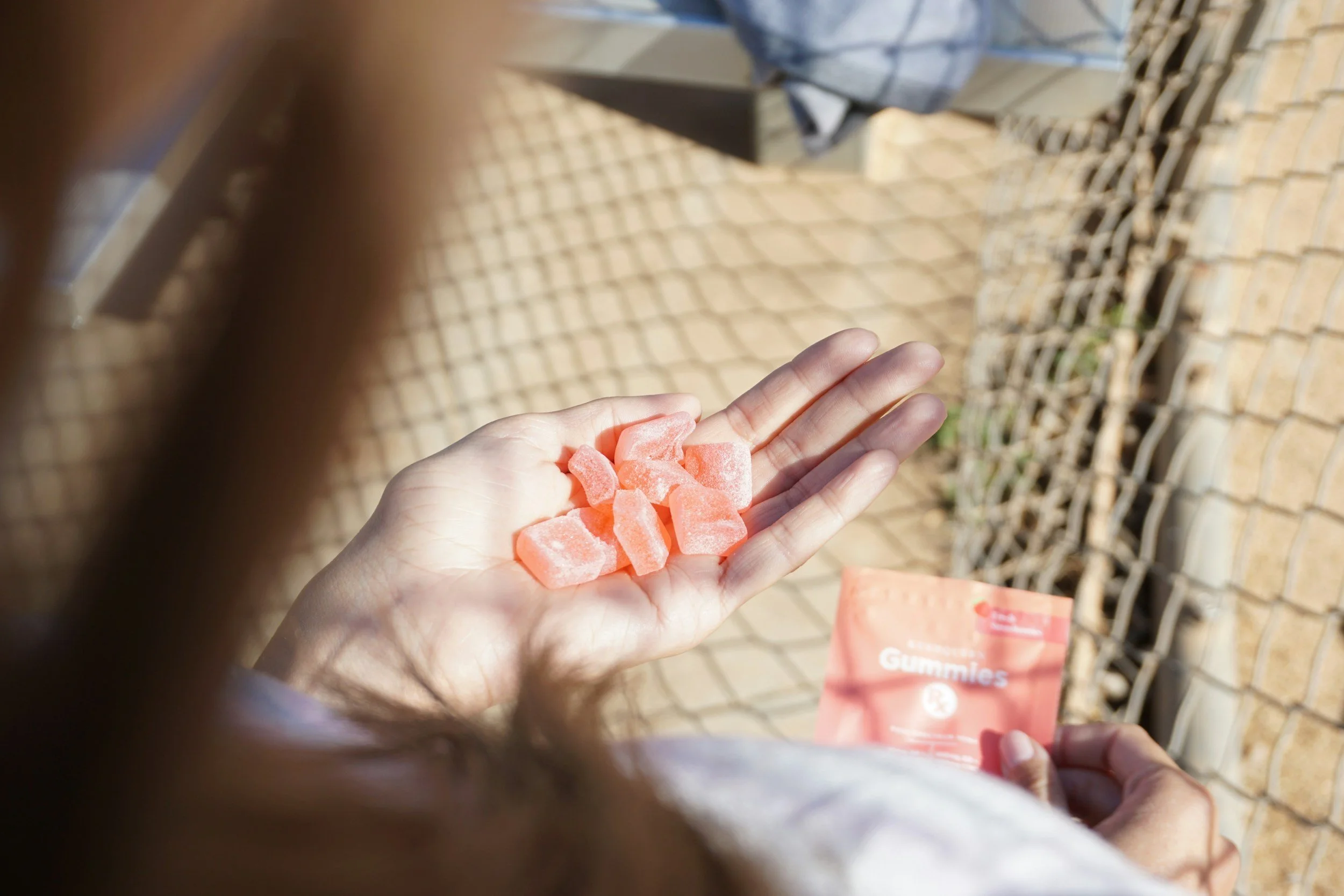
Gummies combine clearly portioned servings with portability, shelf stability, and a particularly broad range of formulations. That has helped make them one of the most prominent formats within the edible category.
Traditional THC gummies sit alongside sour gummies, pectin-based gummies, rosin gummies, CBD and THC ratios, CBN formulations, CBG formulations, and fast-acting options.
For shoppers specifically searching for THC gummies near me, it is worth comparing more than flavor. THC per serving, cannabinoid ratio, type of extract, ingredients, and onset can distinguish products that otherwise look very similar.
Chocolates
Cannabis chocolates combine cannabinoids with a familiar food format and can include milk chocolate, dark chocolate, flavored bars, individual pieces, and other confections.
Portioning is particularly important with a chocolate bar. A full bar can contain multiple servings, so the total THC printed on the package should not automatically be interpreted as the amount contained in one square.
Chocolate also brings ingredients and allergens into the decision. Milk, soy, nuts, and other ingredients can be relevant depending on the product and manufacturer.
Baked Goods
Brownies and cookies are some of the formats most historically associated with cannabis edibles, but regulated baked edibles are quite different from the homemade brownie stereotype.
Licensed products provide labeled cannabinoid and serving information, giving consumers a much clearer idea of how much THC they are consuming.
The same basic rules still apply. Check the THC per serving, determine how many servings are contained in the product, and do not assume that one cookie, brownie, or other individual item necessarily equals one serving without reading its label.
Drinks
Cannabis beverages can include sodas, seltzers, juices, drink mixes, shots, and other infused formats. Depending on the formulation, the experience and onset can differ from a conventional solid edible.
When comparing cannabis drinks vs edibles such as gummies or chocolates, pay attention to THC per serving, servings per container, cannabinoid ratios, and whether the beverage uses a fast-acting or emulsified formulation.
A bottle or can should not automatically be assumed to represent a single serving. The label is what determines the cannabinoid content and serving information.
Fast-Acting Edibles
Fast-acting edibles are designed to shorten the wait associated with traditional oral cannabis. Many use emulsification technologies that disperse cannabinoids differently than conventional oil-based edible formulations.
That distinction can make onset an important part of product selection rather than simply something that happens after you consume it.
Fast acting does not mean low potency. A faster formulation can still contain the same amount of THC per serving as a conventional product, so onset and dose should be considered separately.
How to Read an Edible Label
A cannabis edible label contains much more useful information than the product name on the front of the package. Before choosing an edible, look at the cannabinoid amounts, serving information, ingredients, and total package content.
THC per Serving
THC per serving tells you how much THC is intended to be consumed in one labeled serving.
This is usually the most useful potency number for comparing two edibles. A 5mg edible and a 10mg edible contain very different amounts of THC per serving even if both packages contain a similar total amount.
Massachusetts regulates adult-use edible potency and labeling through the Cannabis Control Commission, so the current state rules are the appropriate reference when interpreting legal serving and package requirements. MassCannabis Commission
Total THC per Package
Total THC describes the amount contained in the entire package, not necessarily one serving.
For example, if a product contains multiple individually portioned servings, the package total represents the THC across all of them. Confusing those two numbers is one of the easiest ways to consume more THC than intended.
Look for both pieces of information before deciding how much of an edible to eat.
CBD, CBN, and Other Cannabinoids
Not every edible is THC-only.
CBD edibles can combine cannabidiol with THC in equal or uneven ratios, while CBN edibles frequently appear in products positioned for evening use. CBG and other minor cannabinoids are increasingly common as well.
You may see these relationships expressed as 1:1, 2:1, 5:1, or another ratio. With ratio edibles, look at the actual milligrams of each cannabinoid in addition to the ratio itself. A ratio tells you the relationship between cannabinoids, while the milligram amounts tell you how much you are actually consuming.
Ingredients and Allergens
Cannabinoids are only part of an edible.
Check the ingredient list for dietary restrictions and allergens just as you would with conventional food. Gummies can contain gelatin or pectin. Chocolates can contain milk, soy, or nuts. Baked products may contain wheat, eggs, dairy, or other common allergens.
Also check the package if vegan, gluten-free, sugar-free, or another dietary characteristic matters to you. Do not assume a product meets a dietary requirement based solely on its format or flavor.
What Is a Low-Dose Edible?
"Low dose" is a relative term rather than a universal description of how a particular amount of THC will feel.
A 5mg edible contains half as much THC as a 10mg edible, but that does not mean 5mg will feel mild to every consumer. Someone with little or no THC tolerance can respond very differently from someone who regularly consumes cannabis.
Some products divide THC into even smaller portions, which can give consumers more control over how much they consume. Lower-dose formats can be particularly useful for shoppers who want to find their individual response without beginning with a larger amount of THC.
The important number is not how strong the package looks. It is how many milligrams of THC are in the portion you actually consume.
Tips for New Edible Shoppers
For a first edible purchase, start with the label. Identify the THC per serving, total THC, number of servings, other cannabinoids, ingredients, and whether the product is traditional or fast acting.
Then consider your own experience. Someone new to oral THC has less information about how their body responds than someone who has repeatedly consumed the same type of edible. Starting with a lower amount gives you more room to learn that response.
Do not rush the process. Because conventional edibles can take up to two hours to produce intoxicating effects, consuming additional THC too quickly can lead to taking substantially more than intended. The CDC specifically identifies delayed onset as one reason edibles present a greater risk of overconsumption.
There is also nothing wrong with asking about a product before buying it. Useful questions to ask a budtender include how much THC is in each serving, how many servings are in the package, which other cannabinoids are present, what type of extract was used, and whether the edible is traditional or fast acting.
At home, keep cannabis edibles in their original packaging and securely away from children and pets. This is especially important for gummies, chocolates, baked goods, and beverages that can resemble ordinary food or candy.
Why Buy Edibles From a Licensed Dispensary?
Edibles are a category where knowing what is in the product is especially important.
Massachusetts' licensed adult-use cannabis system establishes requirements for edible production, testing, packaging, labeling, and dosing. The Cannabis Control Commission maintains the state's current adult-use regulations, including requirements specific to edibles.
That gives shoppers information an unregulated edible may not reliably provide. Instead of guessing at potency, you can read the cannabinoid content, determine the intended serving, check ingredients, and see how many servings are contained in the package.
Regulated labeling does not mean every person will experience a particular dose the same way. It gives you a much better starting point for knowing what you are actually consuming.
Explore THC Edibles at Starbird
At Starbird, we look at edibles as a category with far more variation than simply choosing a flavor. Dose, cannabinoid ratio, extract type, ingredients, onset, and format can all matter when deciding between two products.
Our selection can include gummies, chocolates, beverages, baked products, ratio formulations, solventless options, and fast-acting edibles from licensed Massachusetts producers. Inventory changes as new products and batches arrive, so the live menu is the best representation of what is currently available.
You can shop current edibles before visiting Starbird to compare today's products, cannabinoid content, serving sizes, brands, and prices.
Whether you already know exactly what you want or are still figuring out the difference between a 5mg gummy and a fast-acting beverage, understanding the label and formulation gives you a much better foundation for choosing an edible that fits what you are looking for.
FAQs About THC Edibles
Do edibles work differently on an empty stomach?
Food can influence the absorption and timing of oral THC, so the same edible does not necessarily produce an identical timeline under different conditions. Individual metabolism, dose, formulation, and other factors can contribute as well.
Can you take more of an edible if you do not feel it yet?
Taking additional THC before the first serving has had enough time to develop can lead to consuming more than intended. Conventional edibles can take approximately 30 minutes to 2 hours to produce intoxicating effects, so delayed onset should be considered before taking another serving.
Does a 10mg edible feel twice as strong as a 5mg edible?
A 10mg serving contains twice as much THC as a 5mg serving, but subjective effects do not necessarily increase in a perfectly linear way. THC response varies with tolerance, previous experience, metabolism, formulation, and individual biology.
Are rosin edibles different from distillate edibles?
Yes. They use different cannabis extracts. Distillate is a refined cannabinoid extract, while rosin is produced without hydrocarbon solvents using heat and pressure. THC dose remains important regardless of which extract is used, but the broader chemical composition of the starting extract can differ.
Can an experienced cannabis smoker still be sensitive to edibles?
Yes. Inhaled and oral THC follow different pathways through the body. Oral THC undergoes first-pass metabolism and produces significant 11-hydroxy-THC, so experience with flower or vapes does not perfectly predict how someone will respond to an edible.
FAQs About THC Gummies Near Me
Where can I buy THC gummies near me?
Adults 21 and older can purchase recreational THC gummies from licensed adult-use cannabis dispensaries in Massachusetts. Starbird in Salem carries a rotating selection of cannabis gummies, with current products and availability listed on the live menu.
Can I buy THC gummies recreationally in Massachusetts?
Yes. Adults 21 and older can purchase cannabis edibles, including THC gummies, from licensed adult-use dispensaries in Massachusetts. A valid government-issued ID showing that you are 21 or older is required.
How many milligrams of THC are in a gummy?
The amount depends on the product. Gummies are available in different serving sizes, so always distinguish between the amount of THC in one serving and the total THC contained in the entire package.
Are 5mg or 10mg THC gummies better for beginners?
A lower dose provides more control for someone who does not already know their edible tolerance. Individual sensitivity to THC varies considerably, so a commonly sold serving size should not automatically be treated as the right dose for every person.
How long do THC gummies take to kick in?
Traditional edibles commonly take around 30 minutes to 2 hours to begin producing noticeable effects, although onset varies between people and products. Fast-acting gummies are formulated to produce effects sooner than conventional edibles.
What is the difference between THC gummies and CBD THC gummies?
THC gummies primarily focus on THC, while CBD THC gummies contain measurable amounts of both THC and CBD. The relationship between the cannabinoids is often expressed as a ratio, such as 1:1 THC to CBD.
What are fast-acting THC gummies?
Fast-acting gummies use formulations designed to make cannabinoids available to the body more quickly than conventional edibles. The faster onset does not change the importance of checking the amount of THC in each serving before consuming the product.
How long do THC gummies last?
Edible effects generally last longer than the effects of smoking or vaping cannabis. Duration depends on dose, product formulation, metabolism, tolerance, and individual physiology, so consumers should plan accordingly and never drive while impaired.
Shop by Category
-
![Prerolls]()
Premium Prerolls
-
![Edibles]()
Edibles for a smoke-free experience
-
![Vapes]()
Vape Cartridges and Disposables
-
![Concentrates]()
Potent Concentrates
-
![3.5g and 7g]()
3.5g and 7g Premium Flower
-
![14g and 28g Flower]()
14g and 28g Premium Bulk Flower
-
![THC Drinks]()
Drinks for Social Settings
-
![infused preroll]()
Infused Prerolls
-
![Tincture]()
Tinctures for quick, precise dosage




What Guests Are Saying
Explore a curated selection of Massachusetts cannabis brands chosen for quality, consistency, and character.
-
![Tower Three]()
Tower Three: Flower and Prerolls
-
![Treeworks]()
Treeworks: Vapes, Concentrates, Edibles, Tinctures
-
![Trifecta Farms]()
Trifecta Farms: Flower, Pre-Rolls, Concentrates
-
![Fernway]()
Fernway: Vape Carts
-
![Ahh Chocolate]()
Shop Ahh Edibles
-
![Fresh Connection]()
Fresh Connection: Flower and Prerolls
-
![Bountiful Farms]()
Bountiful Farms: Flower, Vapes and Edibles
-
![Harbor House]()
Harbor House: Edibles, Prerolls, Flower, Vape Carts and Concentrates
-
![Happy Valley]()
Happy valley: Flower, Edibles, Vapes, Topicals
-
![Coast Cannabis]()
Coast: Edibles